Underfloor and pool heating from one heat pump
One heat pump for underfloor heating in winter and pool heating in summer.
Most of the systems we install across Auckland do two jobs with one heat pump: hydronic underfloor heating through winter, then pool heating through summer. One unit to site and service, used all year rather than half of it.
Through the year
Underfloor and pool heating through the year
The floors need heat in winter and the pool in summer, so one unit can serve both.
Winter · the floors
Warm water circulates through loops cast into your slab. The floor itself becomes the heater — no fans, no noise, nothing on the walls.
- Floor surface held at 22–26°C
- Zone by zone, so bedrooms and living areas run to their own schedule
- Even heat across the floor
- Warm floors help reduce damp
Summer · the pool
With the floors off, the same heat pump turns its full output to the pool, through the exchanger built into it on the filtration circuit.
- Pool held around 28°C for comfortable swimming
- Extends the swimming season into spring and autumn
- Pool water never enters the house system — the two circuits stay separate
- Runs off your existing pool pump and filter
One heat pump for underfloor heating in winter and pool heating in summer
Most Champion Heating systems use a single heat pump for two jobs: underfloor heating through winter, then pool heating through summer.
DuoHeat
Benefits of DuoHeat – One Heatpump – Two Uses
- One unit to position. A heat pump needs space, air flow and a sensible distance from bedroom windows, and one position is easier to plan than two.
- One unit to service. One annual service visit, one set of filters and checks, one warranty, one contact when something needs attention.
- One electrical supply. A single unit means one power feed and one set of controls rather than two draws on your switchboard.
- Used all year. A pool-only heater is idle through winter and an underfloor-only system is idle through summer. One unit doing both is used year-round.
- Less plant. One unit and one plant area, instead of two units, two sets of pipework and two concrete pads.
- One team, start to finish. We design, install and service the whole system.
How the system works
Swipe the diagram sideways to follow the full circuit →
Free heat from the air
The Heatpump unit pulls warmth from the air and lifts it to a comfortable water temperature.
Balanced at the manifold
Flow and return pipes feed every floor loop from a cabinet tucked away in a storage cupboard.
Pool heated the same way
Pool water passes through the filter, then the heat pump's built-in exchanger, where it picks up heat without ever mixing.
Floors and pool from one system
A single heatpump keeps the floors warm through winter and the pool swimmable for longer.
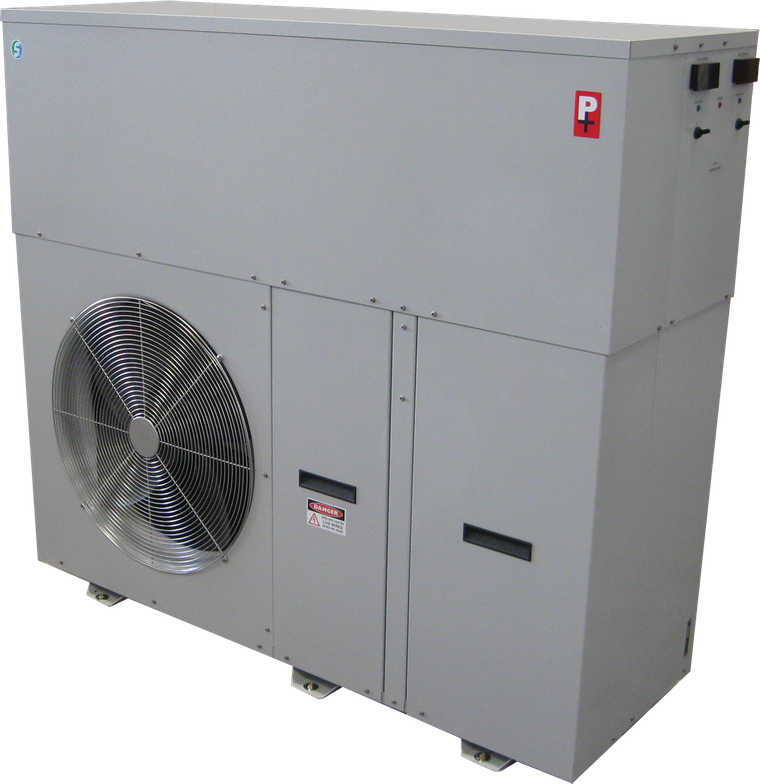
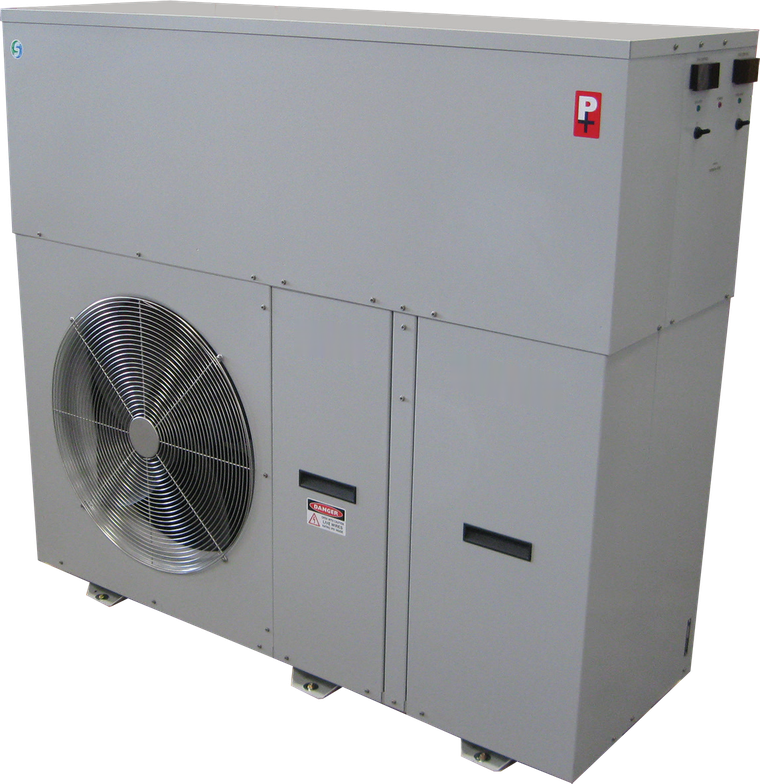
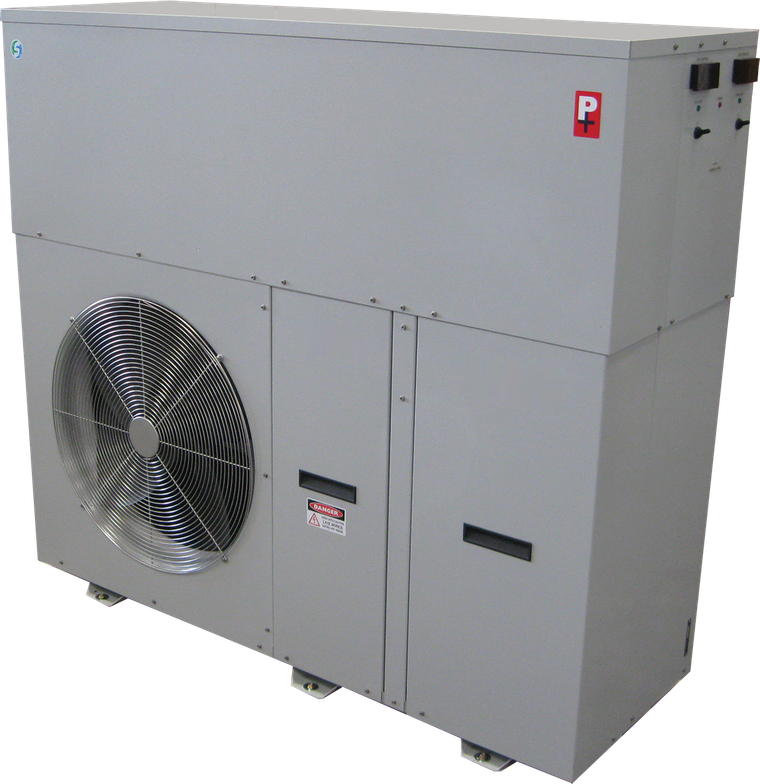
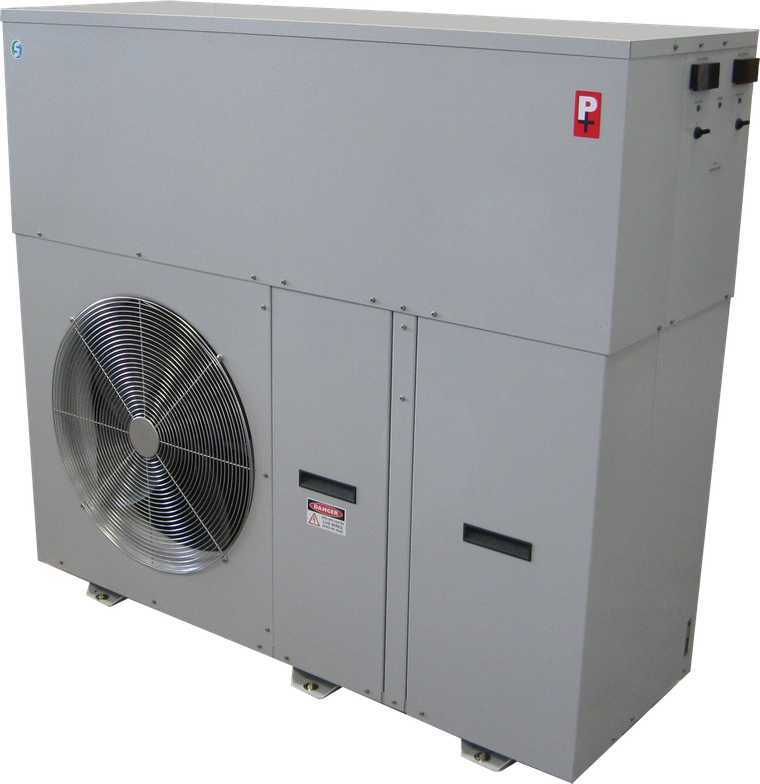
Our DuoHeat pool + underfloor heat pumps
Click a unit to see its full specifications and download the spec sheet.
The pool circuit
How the pool side works
The question we get asked most: does my pool water go through the heat pump? It does not.
Pool pump
Your existing pool pump moves water out of the pool, exactly as it already does every day.
Filter
Water passes through the sand filter first, so only clean water reaches the heat pump.
Inside the heat pump
Two circuits run alongside each other inside one unit — close enough to pass heat across, sealed so chlorinated or salt water never mixes with your house system.
Back to the pool
Warmed water returns to the pool. The heat pump only has to lift the temperature a few degrees at a time, which keeps the running cost low.
Where it suits
Where it suits
New builds
New builds. Loops go into the slab before the pour and the heat pump is positioned properly on the plans — cheapest time to do it, by a distance.
Major renovations
If floors are coming up or an extension is going down, the underfloor half becomes straightforward and the pool side follows.
Existing pools
Adding heating to a pool you already have is usually simple — we tee into the existing filtration circuit and find a spot for the unit.
Pool on the plans
Building the house now, pool later? We size and pipe for it up front so the pool connects later without redoing the plant.
Questions
What people ask us
Can one heat pump heat my floors and my pool?
Yes — it's how most of the systems we install are set up. The heat pump makes warm water; where that warmth goes is a matter of plumbing and controls. Through winter it feeds the underfloor loops in your slab. Through summer, when the floors are off, the same unit puts its output into the pool.
Does it heat the floors and the pool at the same time?
It works on a seasonal split. Your floors need heat in winter and your pool in summer. In the shoulder months the system can serve both, with priority controls deciding which gets heat first. Heating both fully at the same time in winter needs a larger unit, which we would identify at quote stage.
Does my pool water run through the heat pump?
Yes — but only through a titanium heat exchanger built inside the unit. Pool water stays in its own circuit: pump, filter, then the heat pump. The two circuits pass close enough to transfer heat but never mix, so chlorinated or salt water stays away from your house system entirely.
How warm will the pool get?
Around 28°C is the usual target. Heating also extends the swimming season into spring and autumn.
Do I need a pool cover?
It is not required, but a cover has a large effect on running cost. An uncovered pool loses most of its heat overnight through evaporation from the surface.
Can I add hot water as a third job?
Often, yes. The same style of heat pump can also heat your domestic hot water cylinder — and water heating is roughly 40% of a typical power bill, where a heat pump can use up to 75% less energy than a standard electric element. We'll look at cylinder size and location when we quote.
Can this be retrofitted to a pool I already have?
Usually. If your pool has an existing filtration circuit and there's a sensible spot for the heat pump, retrofitting is straightforward. Adding underfloor heating to an existing home is the bigger question — that depends on floor construction, and it's what a site visit is for.
What does it cost to run?
A heat pump moves heat rather than making it, so it can deliver around four units of heat for every unit of electricity (a COP of about 4). More than 80% of New Zealand's electricity comes from renewable sources. See our running costs page for the detail.
Free, no obligation
Request a quote
Tell us about your home, your plans and your pool, and we'll size a system that does both jobs properly — or tell you honestly if your situation needs something else.
Serving Auckland-wide — North Shore, Hibiscus Coast, Central, Eastern Bays, West Auckland, Waiheke, Omaha & Matakana.