Gas underfloor heating
Underfloor heating
A condensing boiler gets its extra efficiency by cooling its exhaust gases until the water vapour in them condenses, recovering heat that a standard boiler sends up the flue. That only happens when the water coming back to the boiler is below about 55 °C. Underfloor heating runs on water at 35–45 °C and returns it at around 30 °C, so the boiler condenses the whole time it is running. Radiators run at 70–80 °C and often return water too hot to condense. The slab also holds its heat, so the boiler can turn itself down and run long, steady cycles rather than switching on and off.
Why the pairing works
Condensing GAS BOILERS...
A condensing boiler earns its name by pulling heat back out of its own exhaust. That only happens when the water coming back from the system is below about 55 °C. On a radiator circuit it often is not. On underfloor it almost always is.
Low flow temperature
A slab runs at 35–45 °C. The boiler condenses for practically the whole heating season instead of only on mild days.
It modulates down to 2.8 kW
The minimum output matters more than the maximum. A slab needs a small, steady amount of heat for most of the winter.
No short cycling
The concrete slab has a much larger thermal mass than a radiator, so the boiler runs long, steady cycles, which reduces wear.
Weather compensation
The boiler reads outside temperature and drops the flow temperature on mild days by itself, so it stays in condensing mode without you touching anything.
How it is put together
GAS BASED FLOOR HEATING
Swipe the diagram sideways to follow the full circuit →
Gas in, 35–45°C water out
The boiler burns gas and hands the heat straight to the water. A slab only wants 35–45 °C, so it condenses almost all winter — flue gases out, condensate to the drain.
Balanced at the manifold
Flow and return feed every loop, with a zone valve and actuator per room. Fitted in a lockable recessed cabinet, normally in a storage cupboard.
The whole floor radiates
The pipework in the slab is the same as the heat pump version. Only the heat source changes.
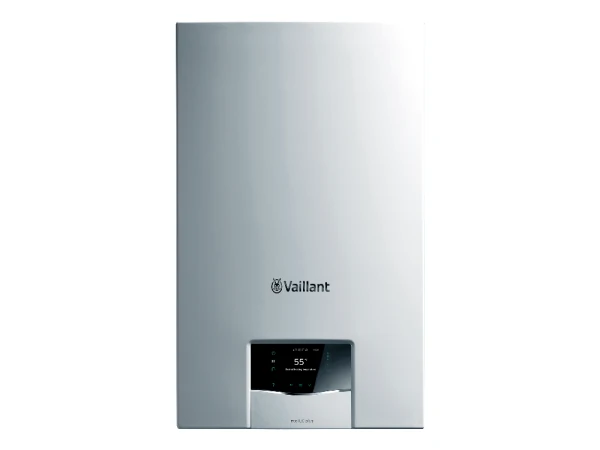
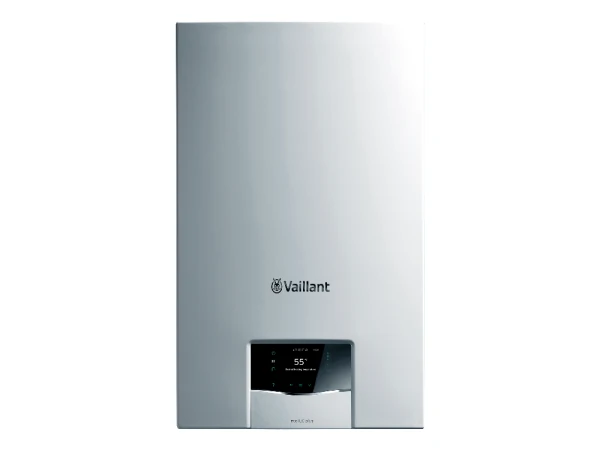
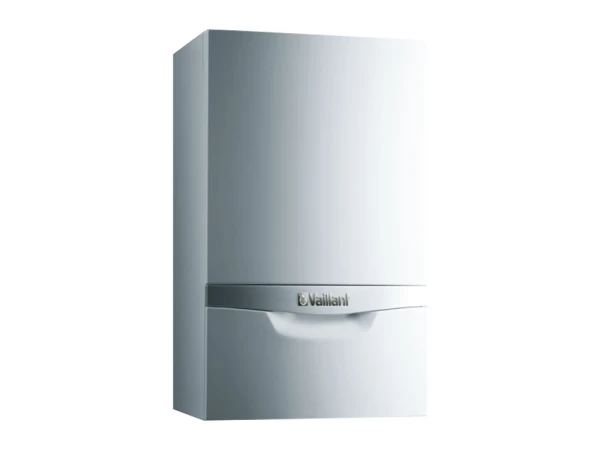
The boilers we fit
Click a boiler to see its full specifications.
Gas or heat pump
Gas and heat pump are not rivals in our shop — we install and service both, every week. What follows is how we actually decide.
Heat pump suits you if…
- You are building new and can site the unit on the drawings
- There is no gas at the property, or the connection is expensive
- You want pool or hot water off the same machine
- You are staying long enough for the running cost to pay back the install
Gas suits you if…
- Gas is already connected and the meter has capacity
- The old boiler is in a cupboard the new one drops straight into
- Up-front cost matters more than long-term running cost
- The house needs heat fast on a cold start, not just steady warmth
If gas is already at the house and the boiler position is easy, a condensing boiler is normally cheaper to put in and more expensive to run. A heat pump is the other way round. Which wins depends on how long you are staying, what the gas connection costs, and whether you also want pool or hot water off the same plant. Ask us and we will price both.
Questions
Gas underfloor questions
Is gas underfloor cheaper to run than a heat pump?
No — a heat pump on underfloor typically delivers around four units of heat per unit of power, which gas cannot match on running cost. Gas is normally cheaper to install and more expensive to run. Which is cheaper over the life of the system depends on your gas price, your power price and how long you are staying. We will price both.
Can I put a heat pump on later?
Yes. The slab, the manifold, the zone valves and the thermostats all stay. Only the heat source is changed; the floor is not touched.
What size boiler do I need?
It comes out of a room-by-room heat loss calculation, not out of the floor area and not out of what was there before. Most Auckland houses on underfloor only are on the 15 kW.
Do I need a cylinder as well?
Only if you want the boiler to make your hot water too. A system boiler heats a stored cylinder; a combi makes hot water on demand with no cylinder at all. See the underfloor and hot water page.
Who does the gasfitting?
The gas work is carried out and certified by a licensed gasfitter, and you receive the gas certificate.
Free, no obligation
Request a quote
Send the plans, or tell us what is there now. We will price the gas option and the heat pump option side by side.